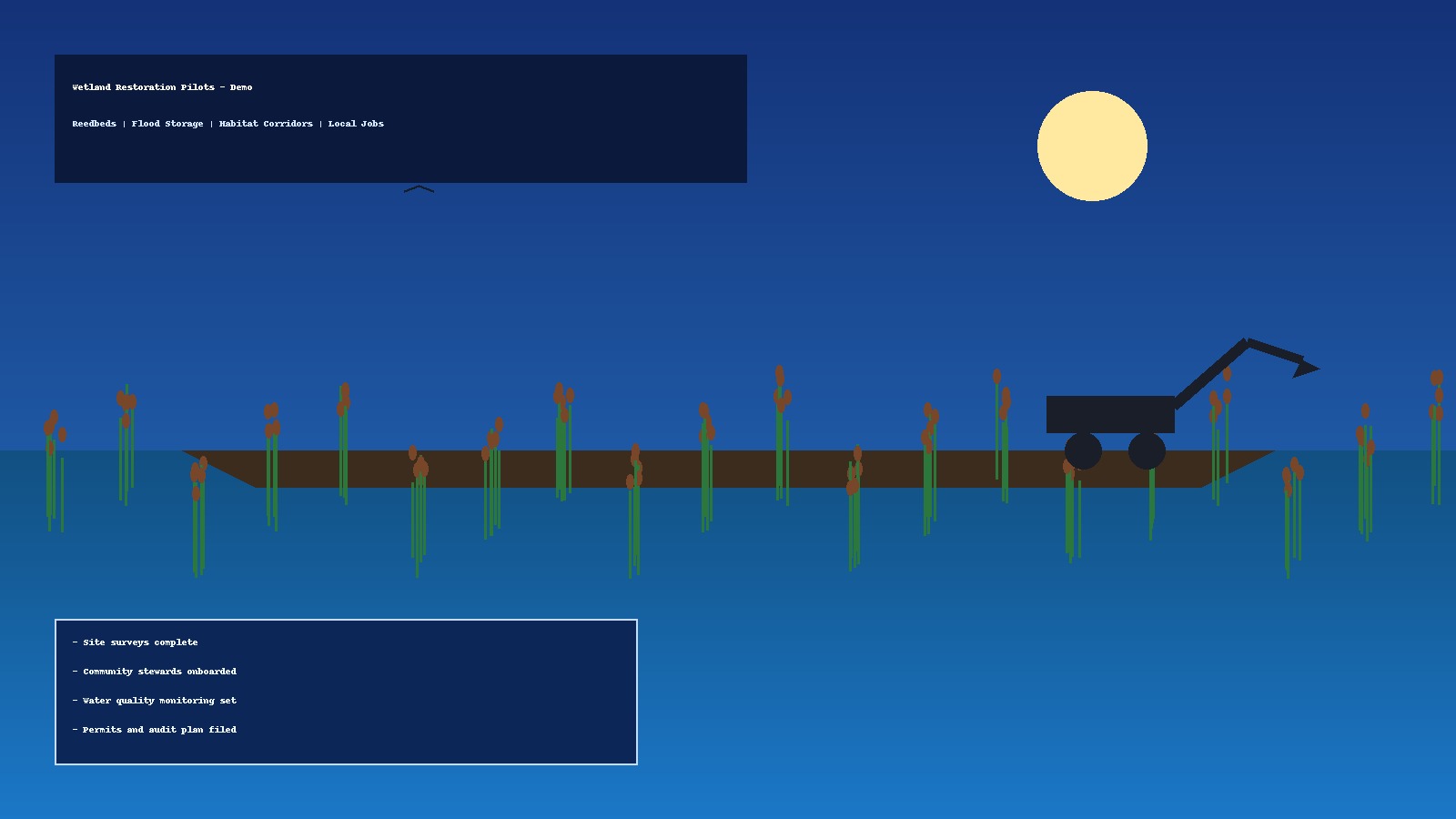
Wetland Restoration Pilots Break Ground
The administration launched three wetland restoration pilots designed to improve drought resilience, store floodwater, and revive coastal biodiversity. The program combines engineered reedbeds with nature-based channels to slow runoff, recharge aquifers, and create new habitats for waders and pollinators.
Local cooperatives will steward each site under five-year agreements, with training on water-quality sampling, invasive-species control, and seasonal burn policy. Monitoring data—turbidity, dissolved oxygen, macroinvertebrate counts—will be published monthly on the open portal alongside satellite-derived vegetation indices.
Initial works include reshaping banks, installing low weirs, and laying boardwalks for safe public access. An independent review will assess hydrologic benefits after the first rainy season, while procurement and workforce plans prioritize nearby suppliers and apprenticeships. The pilots aim to demonstrate that resilient infrastructure can double as public space, outdoor classrooms, and climate adaptation in one coherent design.