Digital Service Standards Adopted for All Public Sites
The Cabinet approved nationwide Digital Service Standards covering accessibility, security, uptime, and plain language. Agencies begin a phased rollout next month, with a public dashboard to track compliance and bug fixes.
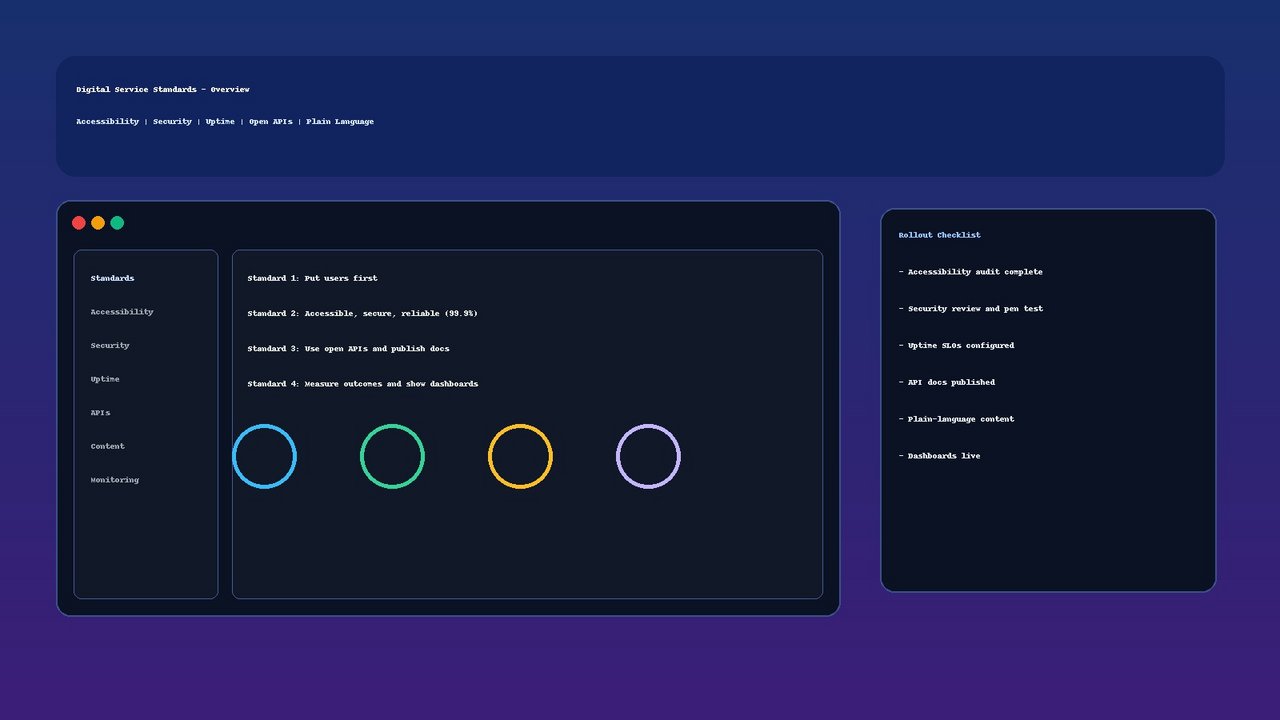
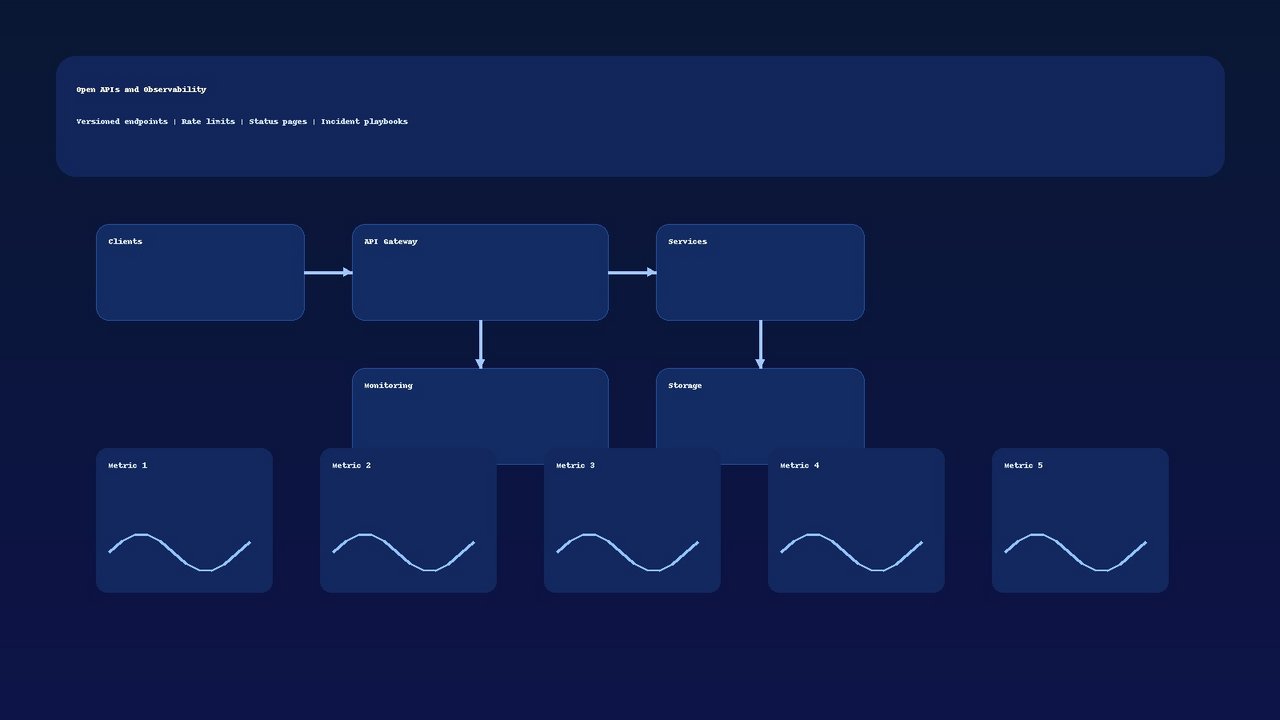
The administration has formally adopted a comprehensive set of Digital Service Standards that will apply to every public website and application. The framework sets clear expectations for accessibility (WCAG-aligned audits and assistive technology testing), security (threat modeling, penetration tests, incident playbooks), reliability (99.9% target uptime with public status pages), and plain-language content reviewed by non-specialist readers. A new technical chapter requires open APIs with documented schemas, versioning policies, and sandbox keys for developers, while product teams must publish performance dashboards showing task completion, load time, and error rates
Relevance of the standard
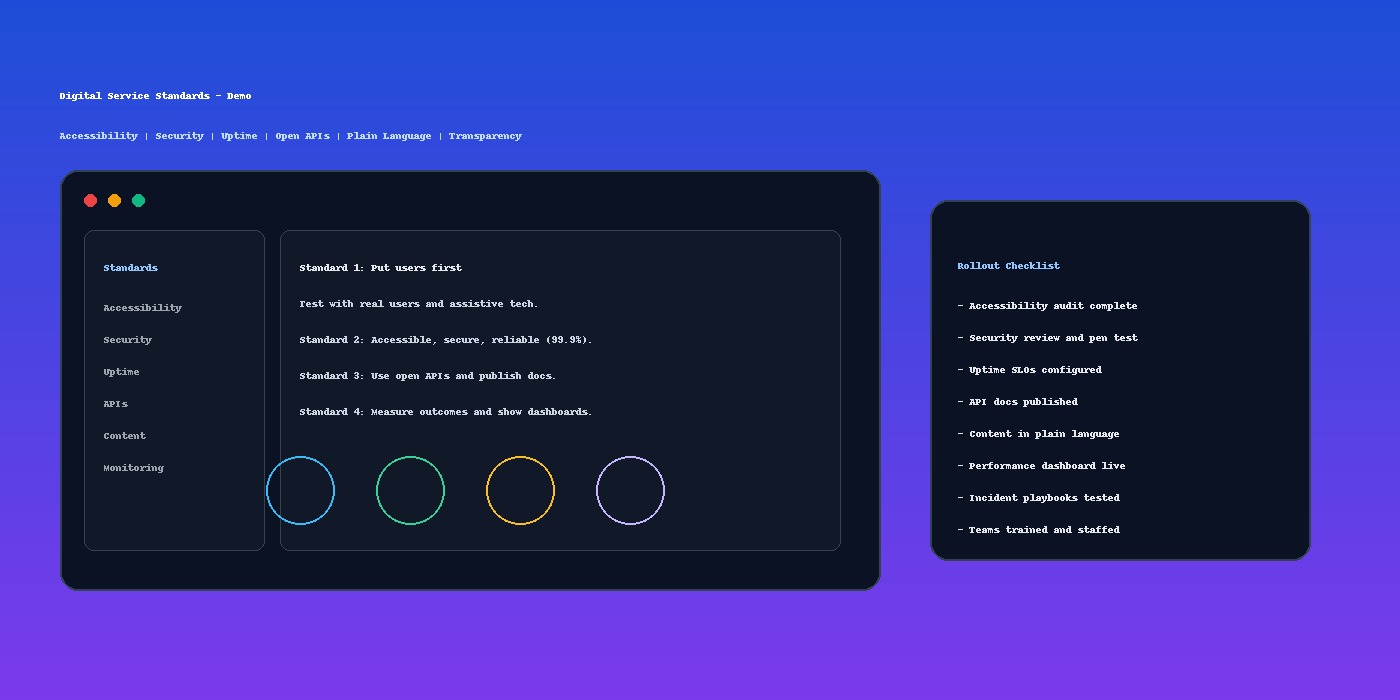
All public sites and apps must meet one shared standard for accessibility, security, reliability, and content quality. Teams will use a common design system, publish uptime and incident data, and expose open APIs with versioned docs.
Residents get faster, clearer services that work on any device. Developers get stable APIs. Public servants get reusable components and clearer rules, reducing rework and inconsistent experiences.
Phase 1 (0–4 months): high-traffic services. Phase 2 (5–8 months): regional portals. Phase 3 (9–12 months): legacy microsites migrated to the design system. Each phase includes audits, fixes, and public status updates.
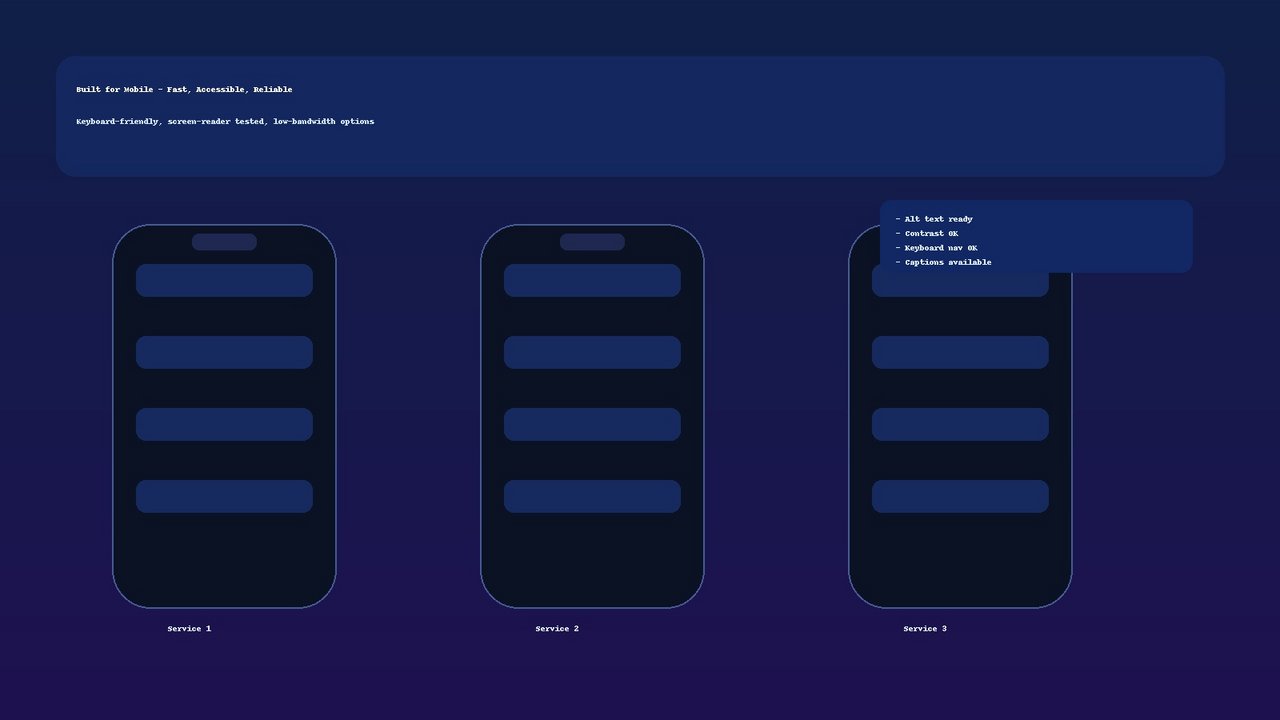
WCAG-aligned audits, assistive tech testing, keyboard navigation, captions/transcripts, color contrast checks, and clear error states. Accessibility statements must be published and updated after each release.
Implementation will roll out in three waves over twelve months. Phase 1 focuses on high-traffic services, phase 2 brings regional portals into compliance, and phase 3 migrates legacy microsites to a common design system. Each launch must include a privacy impact assessment, a bilingual content review, and a continuity plan for outages. To support delivery, the government is releasing reusable design components, procurement guidance for SaaS and hosting, and a help desk for small teams. A public “fix backlog” will surface known issues and expected resolution dates, and quarterly reports will track compliance, with independent audits published in full. The program’s goal is simple: faster, clearer, safer services that work on any device, for everyone.
Additional info